At De Toren Private Cellar, Merlot has long occupied a place of significance.
Not merely as a blending component, though it performs that role with remarkable generosity, but also as a varietal capable of extraordinary expression when site, season, and precision align.
Within the broader South African wine landscape, Merlot is often perceived through a narrower lens: approachable, fruit-forward, uncomplicated. In many respects, that perception is understandable. Merlot remains the largest category within South African red wine sales and is frequently used to soften and round blends.
Yet great Merlot has never been defined by simplicity.
In exceptional vintages and from exceptional vineyard sites, Merlot reveals another dimension entirely. One of poise and depth. Of power carried with restraint. A varietal capable of both grace and authority.
At the highest level, Merlot is anything but secondary.
And so, a question emerged within our cellar:
Could South African Merlot stand beside the finest expressions in the world?
A Blind Tasting Built Around a Hypothesis
To explore this question, our winemaking team assembled a focused blind tasting of internationally acclaimed Merlot-based wines alongside leading South African examples.
But beyond comparison alone, the primary objective was deeper than rankings or preference. We wanted to understand how some of the world’s greatest Merlots express themselves stylistically and qualitatively. What defines their balance, structure, aromatics, texture, and ageing potential? And, viewed through an international lens, where do South African Merlots position themselves within that conversation?
The benchmark regions were selected with intention.
From Toscana, a region widely regarded for producing some of the world’s most powerful and collectable Merlots, we included two internationally renowned benchmarks, including Masseto 2020, arguably among the most iconic single-varietal Merlots ever produced.
From Pomerol and Saint-Émilion on Bordeaux’s Right Bank, regions where Merlot forms the backbone of many of the world’s greatest blends, we selected wines celebrated for their purity, elegance, and complexity.
Alongside these international benchmarks, we included two South African Merlots that we deeply respect for their consistent quality and expression.
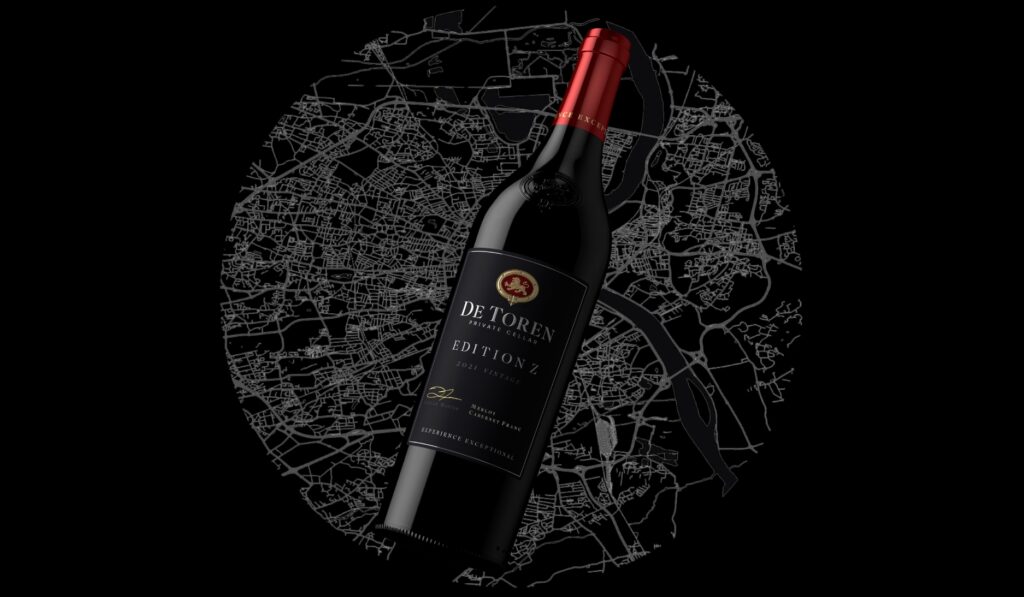
And finally, we included our own Edition Z 2021.
While not a single-varietal wine, Edition Z remains firmly rooted in a Right Bank philosophy, built predominantly around Merlot, with Cabernet Franc bringing lift, structure, and aromatic complexity. The 2021 vintage currently sits between 65% and 75% Merlot, depending on the final barrel selections.
The objective was simple:
To understand how South African Merlot and Merlot-based blends perform when tasted without label, reputation, or expectation.
The Many Faces of Merlot
What emerged from the tasting was not a hierarchy, but rather a study in interpretation.
The wines from Saint-Émilion showed remarkable purity and refinement. They carried themselves with precision: layered, composed, and quietly complex.
The Italian wines moved in an altogether more powerful direction. Darker fruit profiles, greater oak influence, more spice, more structure. These were wines made on a grand scale, bold and commanding, yet still deeply nuanced.
The South African wines told a different story.
Less driven by sheer power, they leaned instead toward elegance and freshness. Red fruit rather than black. Oak is used with greater restraint. The wines showed vibrancy, subtlety, and drinkability without sacrificing seriousness.
And importantly, in terms of quality, they belonged comfortably within the conversation.
For us, one of the most revealing moments came through the inclusion of Edition Z 2021.
The addition of Cabernet Franc introduced another dimension entirely: floral lift layered over red and blue fruit, bringing intricacy that many single-varietal Merlots did not possess on their own.
It reinforced something we have long believed at De Toren:
Blending, when done with precision, creates complexity that no single varietal can fully achieve in isolation.
Why Site Matters
Great Merlot begins long before the cellar.
Single-handedly, the most important part is the site where Merlot is grown. For Merlot to achieve true distinction in South Africa, the vineyard site is everything. The soils must offer balance rather than excessive fertility, with clay playing an essential role in water retention, vine balance, and tannin structure.
At De Toren, the elevated slopes of the Polkadraai Hills provide precisely this balance. Cooling sea breezes move through the vineyards during the afternoon, moderating temperatures and preserving freshness during ripening. Southerly-facing aspects further reduce heat accumulation, while row direction is carefully considered to protect the fruit from excessive sun exposure and maintain aromatic precision.
These cooling influences allow the vineyards to ripen slowly and evenly, preserving both freshness and phenolic development. It is what allows Merlot to perform consistently, even across varying vintages.
But site alone is never enough.
Harvest timing becomes equally critical. Merlot is a varietal with a remarkably narrow window between underripe and overripe expression. Miss that moment by even a few days, and the profile shifts dramatically. Pick too early, and the tannins become green and herbaceous. Pick too late, and the wine moves toward prune and cooked fruit characteristics, losing its freshness and precision.
The pursuit, therefore, is balance: finding the exact midpoint where plushness, depth, freshness, and fully developed aromatics coexist.
Precision in the Cellar
Once the fruit enters the cellar, the philosophy shifts toward preservation rather than force.
Merlot is often regarded as a slightly more medium-bodied varietal, and there can be a temptation to work the wine aggressively during fermentation in pursuit of greater structure or seriousness. Yet with Merlot, there is a very fine line between building texture and over-extraction.
At De Toren, extraction is approached with restraint and precision. Gentle pump-overs and carefully managed punch-downs are used to work the skins softly, without introducing excessive oxygen or extracting harsh tannins too early in the process.
This approach is guided by a firm belief in extended post-maceration.
Rather than forcing extraction at the beginning, the wine remains on the skins after fermentation for up to 28 days, allowing the juice and skins to remain in contact over an extended period before pressing. This slower extraction preserves aromatics and tannin integrity while gradually building concentration, texture, and polish.
Oxygen management during this period also becomes essential. The tannins must evolve and soften without becoming overdeveloped or prematurely aged. By handling the wine gently early on, the cellar team can extend skin contact later, achieving a more polished, chalk-like tannin structure while retaining freshness and varietal purity.
From there, every Merlot at De Toren undergoes malolactic fermentation in barrel. This early interaction between oak and young wine creates integration from the very beginning, allowing the oak influence to become part of the wine’s architecture rather than sitting separately on top of the fruit.
The selection of oak itself is equally deliberate.
Merlot responds particularly well to finely grained oak and carefully judged toast levels. Coarser grain can dominate and suppress the cultivar’s identity, while finer-grained oak matures more slowly and preserves the fruit profile with greater elegance.
When balanced correctly, these choices begin to reveal the hallmark characteristics that define great Merlot: notes of tobacco leaf, cacao, dark chocolate, sweet spice, and subtle vanilla woven seamlessly through the fruit profile.
One of the defining characteristics of De Toren’s Merlot is its naturally high acidity, often significantly higher than many of the other cultivars grown on the farm. Yet because this acidity is naturally retained within the fruit, it integrates beautifully into the wine, contributing freshness, texture, longevity, and balance rather than sharpness.
When all of these elements align, the result is a wine that remains plush yet powerful. Rich, but never heavy. Structured, yet graceful. A wine where freshness, concentration, oak integration, and chalk-like tannin structure exist in harmony.
When the Stars Align
Certain vintages possess an unmistakable energy.
Within our cellar, years such as 2009, 2017, 2020, 2021, and now 2025 stand apart for the extraordinary expression they offered Merlot. Seasons where climate, vineyard, and timing aligned with rare precision.
These are the vintages where Merlot transcends expectation.
Where it no longer presents simply as a soft or approachable varietal, but rather as something regal. Powerful yet composed. Expressive yet restrained.
A grape capable of rivalling the world’s finest wines.
This tasting did not seek to imitate Bordeaux or Toscana.
Instead, it affirmed something far more meaningful:
That South African Merlot, when grown on exceptional sites, harvested with precision, and guided thoughtfully in the cellar, possesses a world-class identity entirely its own.
And at De Toren, that exploration is only just beginning…